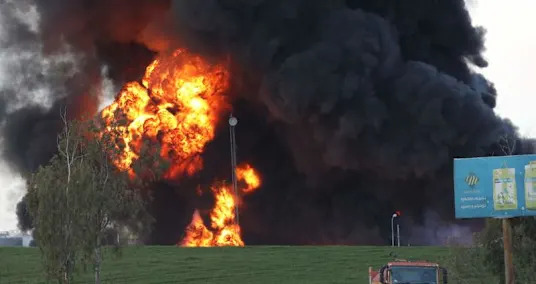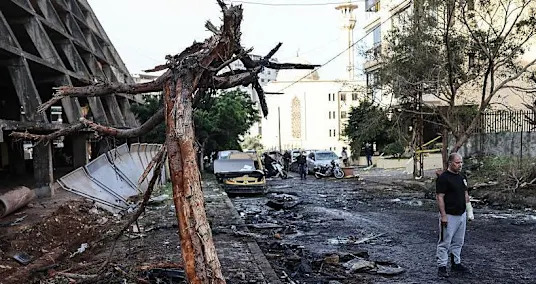
Protests took place in Tel Aviv, Jerusalem, Haifa, and Beersheba, as a survey found broad but uneven support among Jewish Israelis for Operation Roaring Lion.
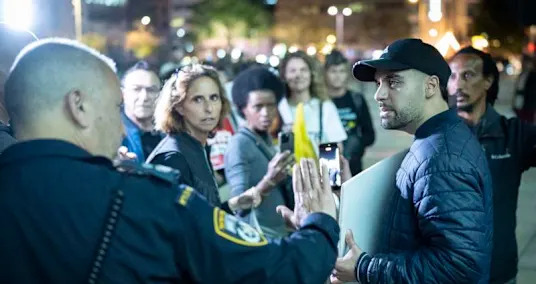
Israel Police arrested 21 anti-war protesters Saturday night as demonstrations against the conflict with Iran expanded in multiple cities despite restrictions on public gatherings.
Protests took place in Tel Aviv, Jerusalem, Haifa, and Beersheba, with hundreds of participants reported in Tel Aviv and Jerusalem and about 100 in Haifa, marking the largest turnout since weekly demonstrations began. Authorities said 13 people were arrested in Tel Aviv and eight in Haifa.
Police said the gatherings were not approved under Home Front Command regulations that ban events with more than 50 people. Officials said the increase in turnout followed calls by groups opposing the government to protest despite the restrictions.
“During a situation assessment that took place at the scene with a Home Front Command representative… it was clarified that there was a real risk to human life and accordingly, Yarkon [precinct] police commander Tzachi Sharabi ordered the gathering to be dispersed,” police said.
Hadash-Ta’al chairman Ayman Odeh, an Arab lawmaker involved in the protests, criticized the police response, calling officers fascists “in the service of the government” and saying they were afraid of “the heroic citizens who went out, despite everything, to make their voice heard.”

Survey shows broad, uneven support for war
The demonstrations come as a March 2026 survey by the Israel Democracy Institute found broad but uneven support among Jewish Israelis for Operation Roaring Lion. Support was strongest on the Right at 87% and about half on the Left.
The survey also found that Jewish and Arab respondents largely agreed that Iran’s resilience has been stronger than expected. Most Jewish respondents said Israeli society could sustain the campaign for up to one month, while 28% said as long as needed. Arab respondents were less optimistic about how long the public could endure the conflict.
A majority of Jewish respondents said Prime Minister Benjamin Netanyahu’s decision was driven by security considerations, while most Arab respondents viewed it as political.
NEUESTE BEITRÄGE
- 1
 The most effective method to Succeed in Your Profession with a Web based Advertising Degree19.10.2023
 - 2Fuel Price Spike Drives Surge in Used EV Sales in Europe26.03.2026
- 3All that You Really want to Be aware of Dental Inserts Facilities01.01.1
- 4After toilet and email issues, Artemis II astronauts fire engine to head for the moon02.04.2026
- 5Moving Wedding Objections for Paramount Functions05.06.2024





Ähnliche Artikel
- Global measles cases drop 71% in 24 years as vaccination coverage improves, WHO says28.11.2025
- Humanity is back at the moon! Artemis 2 astronauts arrive in lunar space05.04.2026
- Robert Irwin on winning 'Dancing With the Stars' 10 years after sister Bindi: 'This was everything I dreamed it would be and so much more'26.11.2025
- Ancient Egyptian pharaoh's boat is being reassembled in public at the Grand Egyptian Museum23.12.2025
- Did we start the fire? A 400,000-year-old hearth sparks new questions about human evolution10.12.2025
- Iranian-linked drone attack kills Kurdish couple in northern Iraq07.04.2026
- Sydney Sweeney's American Eagle campaign and Kendrick Lamar's Super Bowl performance were among the 10 biggest pop-culture moments of 202529.12.2025
- Choosing the Ideal Bed for Quality Rest and Solace05.06.2024
- An Extended period of Voyaging Carefully: the World with Reason22.09.2023
- Israel intensifies Lebanon attacks and hits areas not in Hezbollah's control01.04.2026