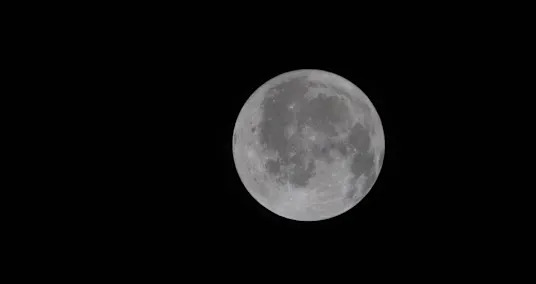
Awe-inspiring new photos captured by the Artemis II astronauts showcase the moon and the interior of the Orion spacecraft, offering a glimpse into their lives in space as they close in on another historic milestone.
One image highlighting the moon even captured a portion of the Orientale basin, which marks a first for human eyes, according to NASA. Only robotic imagers have witnessed this lunar region. The shadowed crater, which is 600 miles (965 kilometers) wide, represents a key transition region between the near and far sides of the moon.
Images taken from inside the Orion capsule have shifted from solely highlighting the glowing spectacle of Earth as seen from a cosmic perspective to refocusing on the moon as the mission draws closer to the silvery orb.
unknown content item
-
The crew is more than halfway to the moon, according to NASA, and their highly anticipated lunar flyby will occur on Monday.
The astronauts said the moon continues to appear larger through Orion’s windows as their journey continues.

The Artemis II images of Earth have been equally stunning, showcasing perspectives of our planet that haven’t been seen by human eyes since astronauts last left Earth orbit during the Apollo era.

The crew has also appeared live on camera throughout NASA’s continuing broadcast of the mission, allowing candid glimpses of their life in space.

In this new verdantly illuminated photo, the majority of the Orion spacecraft’s lights are turned off to avoid glare on the windows, allowing Canadian Space Agency astronaut Jeremy Hansen to look outside and enjoy the view.

And much like during the Artemis I mission in 2022, Artemis II’s journey will include multiple selfie opportunities. The Orion spacecraft’s solar array wings are equipped with cameras that can capture high-resolution selfies, including ones with the moon or Earth.
This image was taken during a routine external inspection of Orion using its cameras on the second day — while also providing a unique perspective of the capsule in the space environment.

NASA’s Artemis program is sending humans into deep space for the first time in more than five decades. Sign up for Countdown newsletter and get updates from CNN Science on out-of-this-world expeditions as they unfold.
For more CNN news and newsletters create an account at CNN.com
NEUESTE BEITRÄGE
- 1
 The Reduced Portage Horse: An Inheritance Reconsidered for Present day Experience08.11.2023
 - 2Must-See Attractions in Washington, D.C.01.01.1
- 3Experience Arranging: Planning for Epic Excursions01.01.1
- 4Netflix's Eddie Murphy documentary explains 'Saturday Night Live' beef: 'That's why I didn't go back for years'17.11.2025
- 5One killed, several injured in Iran missile barrage on southern, central Israel27.03.2026



Ähnliche Artikel
- German mid-sized firms gloomy on outlook, survey finds27.12.2025
- Exclusive new photos from 'Michael' biopic show Jaafar Jackson as King of Pop26.03.2026
- Winter storms blanket the East, while the U.S. West is wondering: Where’s the snow?01.12.2025
- New movies to watch this weekend: See 'The Running Man' in theaters, rent 'One Battle After Another,' stream 'Nobody 2' on Peacock14.11.2025
- Moldova says Russian drones violated airspace29.11.2025
- 10 Distinct Kinds of Chinese Neighborhood Specialty Hot Pot05.06.2024
- Israel approves death penalty law for Palestinians convicted of attacks31.03.2026
- Army commander convicted of Guinea stadium massacre dies in prison26.03.2026
- This Luxurious Thermal Spa In Italy Is Perfect For A Relaxing Escape While Visiting Milan24.11.2025
- Scientists detect X-ray glow from interstellar comet 3I/ATLAS extending 250,000 miles into space18.12.2025