When you buy through links on our articles, Future and its syndication partners may earn a commission.

Recently, the Hubble Space Telescope captured an image of a dwarf galaxy in the constellation Ursa Major. Markarian 178 (Mrk 178) is one of over 1500 "Markarian galaxies," a class defined by their unusually strong ultraviolet emission first catalogued by Armenian astrophysicist Benjamin Markarian.
This small, cloud-like galaxy is dominated by clusters of young, hot, blue stars, yet it also contains a striking red-tinged region. This reddish glow is the signature of something dramatic happening inside: a population of massive, short-lived Wolf–Rayet stars whose powerful stellar winds carve their imprint directly into the galaxy's spectrum.
What is it?
Wolf-Rayet stars are in a brief, turbulent phase of their lives. Having exhausted the hydrogen in their cores, they shed their outer layers in violent stellar winds, producing strong emission lines—particularly from ionized hydrogen and oxygen—that appear red in specialized Hubble filters. Wolf–Rayet stars live only a few million years, so their presence indicates that new stars formed very recently. Yet astronomers were initially puzzled as Mrk 178 has no obvious large neighboring galaxies that could have triggered such activity. It's a puzzle that continues to be a focus for many astronomers.
Where is it?
Mrk 178 is located around 13 million light-years away in the constellation Ursa Major.

Why is it amazing?
Galaxies like Mrk 178 resemble the small, rapidly star-forming galaxies that populated the young cosmos. Studying them today provides clues to how the first galaxies built up their mass and how heavy elements spread through the universe.
As Hubble and ground-based telescopes continue to probe its structure and history, this glittering blue dwarf will help illuminate some of the most powerful forces shaping our cosmos.
Want to learn more?
You can learn more about dwarf galaxies and star formation.
NEUESTE BEITRÄGE
- 1
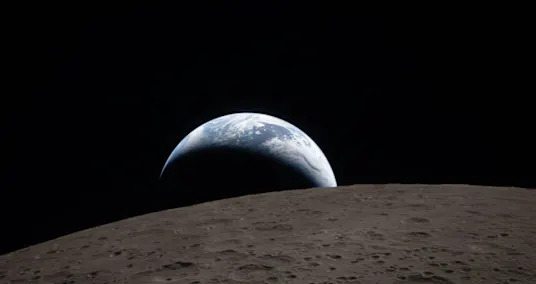
 Artemis 2 captures historic 'Earthset' photo | Space photo of the day for April 7, 202607.04.2026
- 2'Supergirl' drops 1st teaser trailer: Watch Milly Alcock as Kara Zor-El and the return of Krypto the Superdog11.12.2025
- 3Two Israeli infants among wounded by shrapnel in overnight Iranian missile barrage02.04.2026
- 4Investigate These Retreats Well known With Seniors06.06.2024
- 5Divorce filings, feuds and legal trouble: The 'Mormon Wives' drama keeps piling up31.03.2026




Ähnliche Artikel
- Putting pig organs in people is OK in the US, but growing human organs in pigs is not – why is that?08.12.2025
- Knesset sets special panel to fast-track Karhi’s communications reform01.12.2025
- Manual for Mountain Objections on the planet06.06.2024
- If evolution is real, then why isn’t it happening now? An anthropologist explains that humans actually are still evolving17.11.2025
- Why this Iranian island looks like Mars after it rains17.12.2025
- Huge rotating structure of galaxies and dark matter is detected08.12.2025
- Find the Historical backdrop of Common liberties: Advancing Equity and Equity Around the world14.07.2023
- ‘And then we saw the little head.’ Scientists witness rare sperm whale birth30.03.2026
- Agricultural drones are taking off globally, saving farmers time and money04.01.2026
- Dominating Monetary Administration: A Bit by bit Manual for Making an Individual Financial plan06.07.2023